
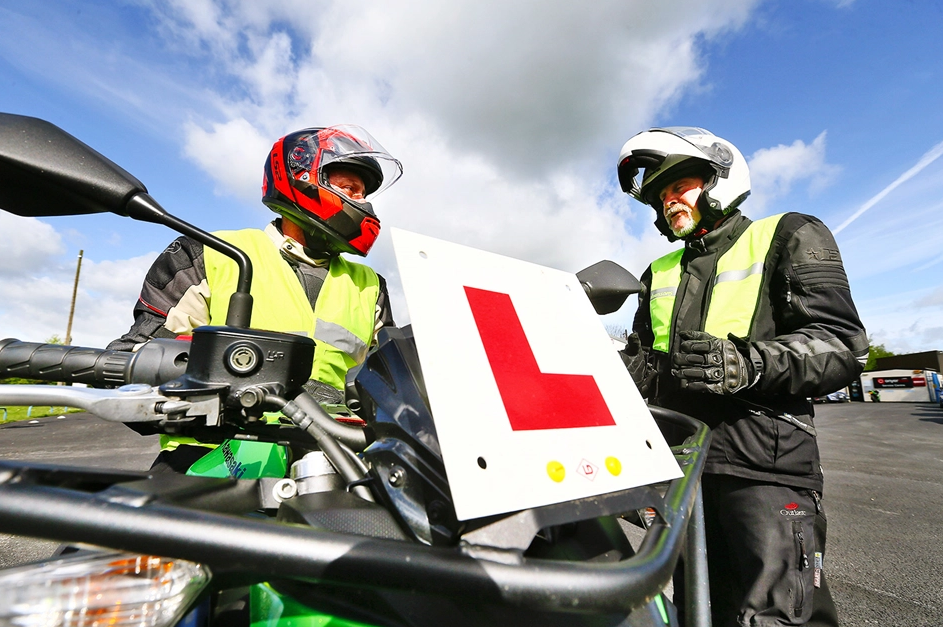
The UK Government is considering changes to the way riders gain and upgrade motorcycle licences. But could a new system have an impact on what you pay for bike insurance? MCN Compare finds out…
If you haven’t been following the debate around motorcycle licensing in the UK, there’s a fairly significant change being considered.
As MCN reported earlier this year, the Government is looking at a potential major overhaul of the current motorcycle licensing structure, including changes to training, testing and the way riders progress through the different licence categories.
The Government’s consultation on the subject closed in May, and the responses are being analysed before any decisions are made; meaning nothing has changed and the existing licensing rules remain in place.
But if changes do eventually come in, there could be an interesting knock-on question for riders: what could it mean for motorcycle insurance?
What changes are being considered?
The UK Government’s consultation looked at a number of possible changes to the current tiered system, first introduced in early 2013.
These include introducing more structured training routes and potentially allowing riders to progress to a higher licence category through training rather than taking another practical test.
There’s also been discussion around automatic and manual motorcycles, the theory and hazard perception test, and the structure of the CBT course for L-plated riders.
The proposals aren’t a done deal, but the consultation shows that the Government is looking at how the system could be modernised while maintaining road safety.
MCN has been following the story since the Government first confirmed it was considering a review, and subsequently asked readers for their views – with opinions ranging from support for a simpler progression system, to concerns about whether easier access to bigger bikes could affect rider safety.
So, what does your licence have to do with your insurance?
Quite a lot.
When you apply for motorcycle insurance, insurers will want to know about your licence and riding experience, alongside details about the motorcycle and how you intend to use it.
That’s because insurers assess risk using a range of factors. The Government itself has pointed out that insurers can consider things including the rider’s age, the type of vehicle being insured, where they live and their driving or riding experience.
Your licence is therefore an important part of the picture.
If the licensing system changes, insurers will need to understand what the new licence categories and training routes mean when assessing a rider.
That doesn’t necessarily mean premiums will go up or down. Insurance pricing is much more complicated than that.
Could a new licence mean cheaper insurance?
Not necessarily.
It’s tempting to assume that if a rider can progress to a larger bike through a new training route rather than another practical test, their insurance could become cheaper.
But there’s no guarantee of that.
Insurance premiums aren’t simply based on whether you’ve passed a particular test. Insurers consider a combination of factors when calculating risk.
For example, a rider moving from a restricted A2 motorcycle to a high-powered adventure bike or sportsbike on a full A licence could see their premium change because of the motorcycle itself, regardless of how they obtained their licence entitlement.
Equally, a rider with years of experience may have a very different risk profile from someone who has only recently gained their full licence.
So if the rules do change, don’t expect a simple new licence = cheaper insurance equation.
What if you’re moving up to a bigger bike?
This is where the proposals could become particularly interesting.
Under the current system, riders progressing from an A2 licence to a full Category A licence through the upgrade route have to complete both Module One and Module Two practical tests.
The Government has been considering a progressive-access route based on structured training and assessment instead. The minimum ages for the different licence categories aren’t proposed to change.
For riders, that could make moving up to a more powerful motorcycle a different process.
For insurers, however, the important thing remains the same: the rider needs to have the correct licence entitlement for the motorcycle they’re riding.
If the system changes, insurers will decide how they treat the new qualifications and training routes when underwriting policies.
What about experienced riders with several bikes?
For the growing number of riders with more than one motorcycle in the garage, the proposed changes could be particularly interesting.
Perhaps you’ve got a 125 or smaller bike for local trips, a bigger adventure bike for touring and something a little livelier for sunny weekends.
If you’re already a full Category A licence holder, the proposed reforms aren’t expected to suddenly change what you’re entitled to ride.
But if you’re currently on A2 and considering moving to a larger motorcycle, any changes to the progression system could affect the route you take to getting the appropriate entitlement.
And once you’ve changed your licence or motorcycle, it’s important to make sure your insurance information is up to date.
Will insurers have to change their policies?
If the licensing system eventually changes, insurers will need to consider what those changes mean for their products and underwriting.
But that’s a decision for individual insurers.
There isn’t currently a Government announcement saying that motorcycle insurance policies will change as a result of the consultation, and there’s no confirmed change to insurance premiums.
The insurance market is responsible for deciding the terms, conditions and pricing of the policies it offers.
So, if you’re hearing claims that the proposed licence reforms will automatically make motorcycle insurance more expensive – or cheaper – it’s worth treating them with caution.
At this stage, we simply don’t know.
Could better training ultimately be good news for riders?
That’s one of the more interesting questions.
The Government’s consultation is partly driven by road safety. Motorcyclists remain disproportionately represented in serious and fatal road casualties, despite making up a small proportion of traffic and in 2024 accounted for 21% of road fatalities.
The proposed reforms therefore aren’t just about making it easier to get onto a bigger bike.
They’re also intended to improve training, rider knowledge and progression, while encouraging riders not to remain on a provisional licence indefinitely.
The motorcycle industry has broadly backed reform, although it has stressed that changes should improve safety without making motorcycling unnecessarily expensive or difficult to access.
If better training produces more experienced and better-prepared riders, that could ultimately be positive for road safety.
Whether insurers would reflect that in their pricing, however, would be up to individual insurers and their assessment of the evidence.
What should you do if you’re buying or insuring a bike now?
For the moment, nothing changes.
The current motorcycle licence rules remain in force while the Government considers the consultation responses.
If you’re buying a new bike, upgrading from an A2 to A licence, or simply renewing your insurance, continue to provide your insurer with accurate information about your entitlement, riding experience, motorcycle and how you use it.
And if your circumstances change, tell your insurer rather than assuming an existing policy will automatically cover you.
That becomes particularly important if you’re moving to a more powerful motorcycle.
When will we know more?
The Government consultation closed on May 11, 2026, and responses are currently being analysed.
In September, the Department for Transport (DfT) confirmed that they had not yet published their conclusions and that further information would follow once the consultation process had been completed.
So for now, it’s a case of watch this space.
The motorcycle licence system could look rather different in the future, but until the Government confirms what – if anything – is changing, the current rules apply.
And when it comes to your insurance, don’t assume a new licence structure will automatically mean a cheaper or more expensive premium.
What it could mean is another change for insurers to consider when assessing the risks associated with different riders and motorcycles.
For riders with a few bikes in the garage, that’s certainly one worth keeping an eye on.
Go back to motorbike insurance guides >
Written by, Sian Daly, MCN Compare online editor.

