With the risk of ice and snow, riding over the winter can be perilous. But if you’ve decided to rest up your bike until spring, it’s important to make sure it’s properly protected. To help avoid expensive damage, rust and corrosion, here are our top tips on how to prepare your motorcycle for winter.
1. Consider where to store your motorbike
Ideally, your motorcycle should be stored somewhere sheltered, where there is minimal risk of damp. A well-ventilated garage, shed or motorcycle shelter is ideal.
Whatever you choose, it’s a good idea to make sure your motorcycle is tucked away so it’s not being constantly brushed up against or is at risk of being knocked over. If you’re storing bikes outside in winter, make sure they’re secure and think about installing a ground anchor.
Alternatively, you could consider a specialist motorcycle storage facility. Although this can be pricey, it’s more likely to provide your motorcycle with heated storage and ensure it is kept at optimum temperatures.
2. Wash and dry your motorbike
Preparation is key to making sure your bike stays in tip top condition and is ready to go when the warmer weather arrives. With that in mind, making sure your bike is well washed and thoroughly dried is crucial.
Check air vents, gaps, holes and the exhaust for dirt and moisture which can lead to corrosion. Your bike should be bone dry before you even think about leaving it in storage.
3. Choose a motorcycle stand as part of your winter storage kit
Think about buying a motorcycle stand for winter storage – for example, a couple of paddock stands to keep the weight off the tyres. This is because leaving your bike in one position for long periods can cause flat spots to develop.
If a motorcycle stand isn’t an option, remember to turn the wheels every so often to spread the load and help keep your tyres in shape. It’s also worth checking your tyre pressures before putting your bike into storage, making sure they’re in line with the manufacturer’s recommendations.
4. Should you warm up your motorcycle every so often?
Some motorcyclists swear by starting their bikes every so often over winter, just to get the engine up to temperature. Others don’t think it’s such a good idea, arguing that it can lead to condensation building up inside the engine and exhaust.
In fact, regularly starting your motorcycle and leaving it idling for short periods can do more harm than good, particularly if the engine doesn’t reach its full operating temperature.
If you’re planning to store your bike for several months, it’s generally better to prepare it properly and leave it switched off until you’re ready to ride again.
If you’re unsure what’s best for your motorcycle, check your owner’s manual or speak to your local garage.
5. Keep the battery charged
Keeping your battery charged over winter can minimise the risk of it becoming flat.
A smart battery charger or maintainer is a good option, as it can monitor the battery and maintain its charge without overcharging it. Just make sure you choose one that’s compatible with your motorcycle’s battery.
If you want, you could even remove the battery and store it somewhere dry, checking and charging it as needed. Either way, it’s worth following the manufacturer’s recommendations to keep your battery in good condition.
6. Top up the fuel tank
Another point that’s often debated when it comes to motorcycle winter storage is whether to top up your fuel tank or not.
For many motorcycles, filling the tank with fresh fuel before storage can help reduce condensation and lower the risk of rust developing inside a metal tank.
However, fuel can deteriorate over time, particularly if your bike is going to be sitting unused for several months.
You could consider adding a suitable fuel stabiliser to help keep the fuel in good condition. Just make sure you follow the product instructions and check your motorcycle manufacturer’s recommendations, as storage requirements can vary between bikes.
7. Plug gaps
Plugging gaps such as the exhaust and vents stops condensation and moisture from creeping in. More importantly though, it also stops mice from nesting inside your bike.
It shouldn’t be too much of a problem if you’re storing your motorcycle indoors in a spare room or secured garage. But if you’re storing bikes outside in winter, plugging gaps with rags or clothes is something to bear in mind. Just make sure you remember to remove them before you start to use your bike again.
8. Protect your motorbike from corrosion
Spraying suitable parts of your motorbike with an anti-corrosion lubricant can help protect it from rust and corrosion over winter.
Pay particular attention to exposed metal components, but make sure you follow the product instructions and avoid getting any lubricant on your brake discs, brake pads or tyres.
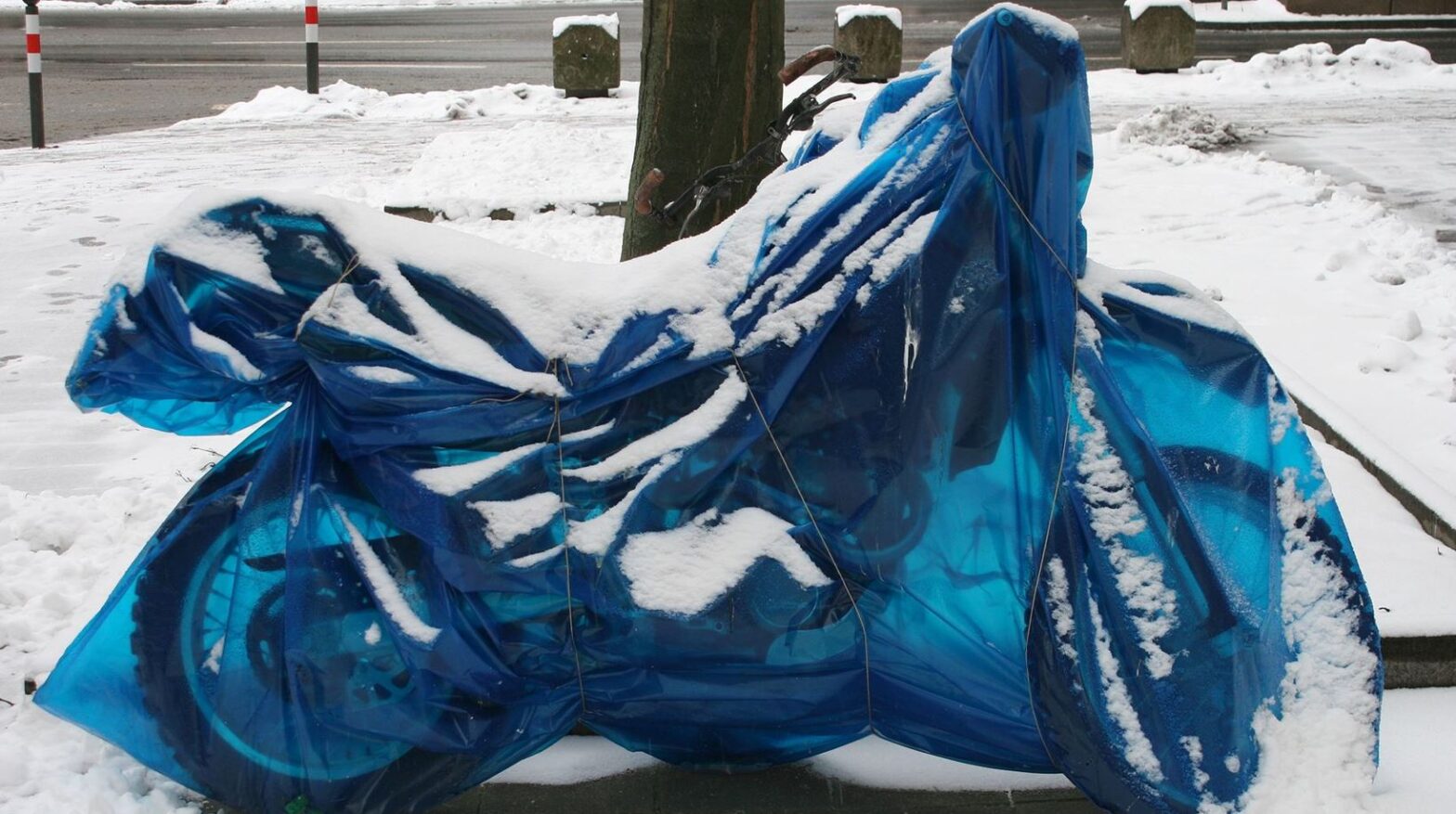
9. Cover your motorcycle
Even if you’re storing a motorcycle indoors, you should ensure it’s covered. Ideally, the covering should allow air to circulate while keeping dust and debris off your bike.
You can of course opt for specially made motorbike covers for the most effective protection, but any fabric will do – for example, old curtains or even tablecloths.
10. Don’t forget the rest of your kit
Keeping your kit stored in one place over winter makes it much easier to find everything come spring. Of course, if you’ve only got one set that’s easy enough but if you’ve got a range of accessories for track days, touring or just everyday use, you can organise your kit with these great storage options.
Should I insure my motorcycle over winter?
If you’re preparing your motorcycle for winter storage, you might not feel the need for insurance. But while cancelling your policy might seem the most cost-effective thing to do, it could work out to be a false economy.
Cancelling your motorcycle insurance policy could leave you without cover if your bike is stolen or damaged by fire. If your motorcycle’s safely stored indoors, you might not view these events as potential risks, but that’s the point of insurance; it covers the incidents you least expect to happen. Cancelling your policy early could also mean paying a cancellation fee.
Instead, you could speak to your insurer about laid-up insurance for your motorbike, which may provide protection against risks such as fire and theft while your motorcycle is off the road.
These types of policies can offer a compromise between having no cover at all and maintaining a full road-use policy while your bike is being stored for winter.
The level of protection, policy duration and availability will depend on the insurer, so it’s important to check exactly what’s included before making any changes to your existing cover.
What happens if I SORN my motorbike over winter?
A SORN is a Statutory Off Road Notification. It’s an official declaration to the DVLA that your motorcycle is being kept off public roads.
If you’re sure you won’t ride your motorcycle over winter, arranging a SORN means you won’t need to pay vehicle tax while it’s off the road. You’ll also automatically receive a refund for any full remaining months of vehicle tax.
Declaring your motorcycle SORN also means you’re no longer legally required to keep it insured while it’s off the road. However, that doesn’t mean you have to cancel your insurance.
Even if your motorcycle is SORN, you can still choose to keep suitable cover in place, such as laid-up insurance, to help protect it against theft or damage while it’s in storage.
Just remember, you’ll need to tax your motorcycle again and have appropriate insurance in place before returning to the road. The exception to the usual SORN road-use restriction is travelling to or from a pre-booked MOT or other testing appointment, subject to the relevant legal requirements.
Motorcycle insurance for all seasons
Whether you’re a hardy all-weather biker or prefer to store your motorcycle over winter, it’s important to have insurance you can rely on when you’re out on the road.
At MCN Compare, we make searching for motorcycle insurance quotes quick and easy, simply answer a few questions and we’ll help you compare quotes from a range of insurance providers.
Find cover that suits your needs and budget by comparing motorcycle insurance quotes with MCN Compare today.
Go back to our insurance guides >
Written by, Sian Daly, MCN Compare, online editor.